Flattening of Higher Education on #CollegeChat October 18

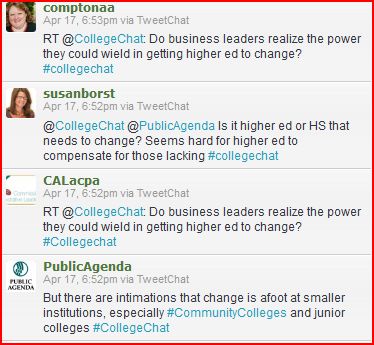
Mark Greenfield, a noted higher education web communications expert and speaker, will discuss how higher education is being flattened and what that will mean for the future of education during #CollegeChat on October 18, 2011 at 9 pm Eastern.

According to Greenfield, “Our system of higher education is based on a model that is centuries old. It was built for a world that no longer exists. Change is coming and faster than you think.” During #CollegeChat, Greenfield will discuss with attendees what the “flattening of higher education” will mean including:

  • What the similarities are between the flattening of the business world and the coming flattening of higher education
  • Whether higher education has already reached the tipping point
  • How will stealth fighter parents replace helicopter parents and how will these parents impact higher education
  • How are the explosion of higher education competitors accelerating the flattening of higher education
  • Why is higher education ripe for the unbundling of services and activities
  • What does the future hold for higher education

Mark Greenfield is a highly regarded, influential member of the higher education web community.   He is an experienced consultant and an award winning speaker who is known for his thoughtful vision of the future of the web and technology on college campuses. He is very active in the web community serving on numerous boards and committees as well as being the owner and driving force behind the uwebd social network, an active community of over 3,500 higher ed web professionals from across the world.

About #CollegeChat

#CollegeChat is a live bi-monthly conversation intended for teens, college students, parents, and higher education experts on Twitter. #CollegeChat takes place on the first and third Tuesday of the month at 6 p.m. PDT/ 9 p.m. EDT. Questions for each #CollegeChat edition can be sent to Theresa Smith, the moderator of #CollegeChat via http://Twitter.com/collegechat , by entering questions online on the CollegeChat Facebook page at http://ht.ly/1XIqV , or by email. More detailed information about signing up for Twitter and participating in #Collegechat  can be found at  http://pathwaypr.com/how-to-participate-in-a-twitter-chat .CollegeChat can also be found on Twitter at http://Twitter.com/collegechat .

Key Factors First Generation College Students Need to Focus on for College Success on #CollegeChat October 4

Shonda Goward, a college admissions advisor and founder of First Generation University, will discuss what key factors first generation college students need to focus on for college success during #CollegeChat October 4, 2011 at 9 p.m. EDT.

According to the National Center for Education Statistics, one third of students entering college today are first generation students. First generation college students are defined as students that are the first members of their immediate family to attend college.  In addition, one fourth of students entering today are both first generation and low income. Unfortunately, many first generation students are living on the edge and maybe within one crisis -whether it be financial, family, scholastic, or health- from dropping out of college.

During #CollegeChat, Goward will address the difficulties facing first generation college students and the steps they can take to be successful including:

  • Why it is critical to investigate programs for first generation students before selecting a college.
  • Why first generation students need more guidance than second generation students.
  • Why it is critical for students to have family support and why this is often difficult.
  • Why it is important to have an educational plan. What should be in their educational plan.
  • How students should properly manage their finances.
  • How students should map out their study time.

The founder of First Generation University, Shonda Goward, is passionate about first generation college students because she was one. Shonda attended the University of North Carolina at Chapel Hill as an out-of-state student, and graduated with a double major in Journalism and Mass Communication and Political Science.  However, being a first generation student definitely presented challenges that were vastly different than those of her peers. Upon completing a Master of Arts degree in English, Shonda began working in higher education as both an Instructor of English, and Admissions Officer, and saw many students excited to be admitted to a university, but wholly unaware of what to do next or how to succeed in the classroom.  First Generation University is a reflection of her personal commitment to giving first generation, and other non-traditional students, agency when it comes to their success

About #CollegeChat

#CollegeChat is a live bi-monthly conversation intended for teens, college students, parents, and higher education experts on Twitter. #CollegeChat takes place on the first and third Tuesday of the month at 6 p.m. PDT/ 9 p.m. EDT. Questions for each #CollegeChat edition can be sent to Theresa Smith, the moderator of #CollegeChat via http://Twitter.com/collegechat , by entering questions online on the CollegeChat Facebook page at http://ht.ly/1XIqV , or by email. More detailed information about signing up for Twitter and participating in #Collegechat  can be found at  http://pathwaypr.com/how-to-participate-in-a-twitter-chat .CollegeChat can also be found on Twitter at http://Twitter.com/collegechat .

#CollegeChat Transcript: Tips on the Common Application

College Planning Expert Discusses What High School Students Need to Know About the Common Application on #CollegeChat August 16

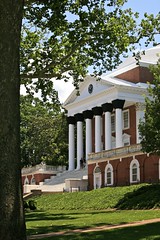
UCLA Powell Library
Creative Commons License photo credit: saturnism

Jeannie Borin, M.Ed, a college admissions expert and president of  College Connections will provide Twitter attendees, including high school seniors and parents, with tips on applying for college with the Common Application during #CollegeChat August 16, 2011 at 9 p.m. EDT.

The college application season is now well underway and as rising high school seniors head back to school one of the ways they can get ahead in applying for colleges is to make sure they are prepared to fill out application forms intelligently and effectively. With more than 450 colleges now using the online Common Application, also known as the Common App, Borin will address with attendees:

  • How to find out which colleges use the Common App
  • How to use the form  to apply to colleges
  • Tips on how to approach the essay section
  • How to set up a schedule to ensure students are applying on time

Borin is the founder and CEO of College Connections, a college and educational consulting service with college admissions consultants located across the country. Her extensive educational background includes school administrator, counselor, admissions director, teacher and curriculum supervisor in both the public and private sectors. Jeannie received her Masters Degree in Counseling and Education and Bachelor of Science Degree in Sociology/Psychology from the University of California, Los Angeles. She mentored graduate students through the UCLA counselor-training program and is state certified. Borin has been awarded Professional Membership with the Independent Educational Consultants Association (IECA), is also a Professional Member of the National and Western Association of College Admissions Counselors as well as the Higher Educational Consultants Association.

About #CollegeChat

#CollegeChat is a live bi-monthly conversation intended for teens, college students, parents, and higher education experts on Twitter. #CollegeChat takes place on the first and third Tuesday of the month at 6 p.m. PDT/ 9 p.m. EDT. Questions for each #CollegeChat edition can be sent to Theresa Smith, the moderator of #CollegeChat via http://Twitter.com/collegechat , by entering questions online on the CollegeChat Facebook page at http://ht.ly/1XIqV , or by email. More detailed information about signing up for Twitter and participating in #Collegechat  can be found at http://pathwaypr.com/how-to-participate-in-a-twitter-chat . CollegeChat can also be found on Twitter at http://Twitter.com/collegechat .

#CollegeChat Transcript: Debt Ceiling Fall out on Financial Aid

Debt Ceiling Fallout for Students 2011/2012 Financial Aid on #CollegeChat August 2

Bus3
Creative Commons License photo credit: Public Notice Media

With the debt ceiling deadline only days away, millions of college students plans for paying for college are in limbo. On August 2, 2011 at 9 p.m. EDT,  Mark Kantrowitz, a nationally recognized bestselling financial aid expert and author, and Sharon McLaughlin, a college planning consultant and former college administrator, will discuss with Twitter attendees the potential impact the debt ceiling crisis will have on financial aid for 2011/2012 during #CollegeChat .

During #CollegeChat, Kantrowitz and McLaughlin will discuss what forms of financial aid are at risk including Pell Grants, Stafford Loans, Perkins Loans and PLUS Loans for Parents. In addition, they will also discuss what impact the debt ceiling crisis may have on colleges themselves including layoffs and shutdowns.

In addition, the panel will  discuss what options are available for students to fund their education in the event their federally based financial aid is impacted.

Kantrowitz is the publisher of FinAid.org and author of the new e-book “Secrets to Winning a Scholarship”. He is also the founder of FastWeb.com, the largest and most popular free scholarship matching service. McLaughlin is a college planning consultant and financial aid expert and founder of McLaughlin Education Consulting (http://www.headforcollege.com). She is also a former college administrator with more than twenty years of experience in student enrollment services. Sharon draws her expertise from her work at private and public colleges in New England, both as a college admissions and financial aid administrator.

About #CollegeChat
#CollegeChat is a live bi-monthly conversation intended for teens, college students, parents, and higher education experts on Twitter. #CollegeChat takes place on the first and third Tuesday of the month at 6 p.m. PDT/ 9 p.m. EDT. Questions for each #CollegeChat edition can be sent to Theresa Smith, the moderator of #CollegeChat via http://Twitter.com/collegechat , by entering questions online on the CollegeChat Facebook page at http://ht.ly/1XIqV , or by email. More detailed information about signing up for Twitter and participating in #Collegechat can be found at http://pathwaypr.com/how-to-participate-in-a-twitter-chat .CollegeChat can also be found on Twitter at http://Twitter.com/collegechat .

#CollegeChat Transcript: Is Higher Education’s Future Online?

#CollegeChat: Is Bill Gates right?

“Hot Topics” is back on #CollegeChat  July 19, 2011 at 9 pm Eastern and 6 pm Pacific. During “Hot Topics” we will be discussing whether Bill Gates is right.  Is the future of higher education online?

Last August during the Techonomy conference in Lake Tahoe, Techcrunch reported that Bill Gates spoke about the not too distant future:

Five years from now on the web for free you’ll be able to find the best lectures in the world,” Gates said. “It will be better than any single university.”

But college needs to be less “place-based,” according to Gates. Well, except for the parties, he joked.

But his overall point is that it’s just too expensive and too hard to get these upper-level educations. And soon place-based college educations will be five times less important than they are today.

Free Education Online

There are already examples of Gate’s vision of free education online. According to Guidetoonlinsschools.com recent post, “Web-Based Education: Cheaper, More Accessible, Better Quality” :

If you were going to look for present day examples of Gates’ free, non place-based education, two good places to start are the Khan Academy and MIT’s OpenCourseWare. Khan Academy is a non-profit website, which has over 2,000 free videos covering K-12 subjects and topics like SAT prep. The videos reflect Gates’ ideal: at about 10 minutes each, they’re short in length but high in quality.

MIT’s OpenCourseWare project has been an experiment in free, web-based college courses. For each class, students can access lectures, syllabi, and other course materials. These materials were also designed to be stand-alone and easily digestible—lecture notes replace clunky textbook chapters, and the best materials from several traditional MIT classes are combined to create one comprehensive online course. In 2010, OpenCourseWare had almost 100 million page views.

Background Reading

http://www.guidetoonlineschools.com/articles/community/transparency/education-online#ixzz1SUKvzzSK

http://techcrunch.com/2010/08/06/bill-gates-education/

http://elearningtech.blogspot.com/2010/01/value-of-online-degree.html

http://www.westga.edu/~distance/ojdla/spring121/columbaro121.html

New to Twitter?

In order to participate in the chat, attendees will need to have a Twitter account.  To sign up for a Twitter account, go to http:// twitter.com. The easiest way to follow the chat is to use TweetChat (http://tweetchat.com). Simply log in to TweetChat with your Twitter information (email or username followed by password) and then enter in CollegeChat without the “#” and you will be placed into the chat room with only those participating in #CollegeChat. More detailed information about signing up for Twitter and using TweetChat can be found at http://pathwaypr.com/how-to-participate-in-a-twitter-chat .

About #CollegeChat

#CollegeChat is a live bi-monthly conversation intended for teens, college students, parents, and higher education experts on Twitter. Questions for each #CollegeChat edition can be sent to Theresa Smith, the moderator of #CollegeChat via http://Twitter.com/collegechat, by entering questions online on the CollegeChat Facebook page at http://ht.ly/1XIqV , or by email. CollegeChat can also be found on Twitter at http://Twitter.com/collegechat.


#CollegeChat Transcript: Are We in a Higher Education Bubble?

#CollegeChat: Higher Education Bubble? Is College Worth it?

Over the last few months there has been a lot of media coverage over whether we are in a higher education bubble and if so, is a college degree today worth the expense.  During the June 21, 2011 edition of #CollegeChat we will discuss this issue.

NPR took a look at the issue in their recent article “Making Headlines Since the ‘70s: Is College Worth it.” As part of their story, NPR interviewed Kevin Carey, policy director for the think-tank Education Sector. Carey argued that the recent stories debating whether college was worth it was not a new story at all but one that creeps back up during economic downturns.

“It’s missing a lot of really important long-term trends,” he says. “If you look at wage data, what you see is that people with college degrees are making more and more and more money, and basically everyone else is either staying the same or falling back.

Carey went on to point out that college graduates “are the only segment of the economy where employment has actually gotten better during the first five months of this year.”

“If you’re a parent and you’ve spent your whole life trying to get your son or daughter into a good college and spent a lot of money, the last thing you want to hear is that that was a bad idea and they’re going to be coming home and they’ll be unemployed soon,” he says. “And so people gravitate toward stories that speak to their fear and their anxieties.”

Pay Pal founder Peter Thiel has also joined the debate by offering 20 talented college students under 20 an opportunity to earn $100,000 over two years by leaving school and beginning a company instead. According to Thiel’s interview with TechCrunch, he believes:

“There’s been a sea-change in the last three years, as debt has mounted and the economy has faltered. This wouldn’t have been feasible in 2007,” he says. “Parents see kids moving back home after college and they’re thinking, ‘Something is not working. This was not part of the deal.’ We got surprisingly little pushback from parents.” Thiel notes a handful of students told him that whether they were selected or not, they were leaving school to start a company. Many more built tight relationships with competing applicants during the brief Silicon Valley retreat– a sort of support group of like-minded restless students.

Dale J. Stephens is a 19-year-old  entrepreneur and one of the first recipients of the Thiel fellowship. According to his recent CNN byline “College is a Waste of Time”, he is also the founder of UnCollege, a social movement supporting self-directed higher education and building RadMatter, a platform to demonstrate talent.

In his CNN byline, Stephens reported:

College is expensive. The College Board Policy Center found that the cost of public university tuition is about 3.6 times higher today than it was 30 years ago, adjusted for inflation. In the book “Academically Adrift,” sociology professors Richard Arum and Josipa Roksa say that 36% of college graduates showed no improvement in critical thinking, complex reasoning or writing after four years of college. Student loan debt in the United States, unforgivable in the case of bankruptcy, outpaced credit card debt in 2010 and will top $1 trillion in 2011.

For Stephens leaving college made sense. He wrote:

We must encourage young people to consider paths outside college. That’s why I’m leading UnCollege: a social movement empowering individuals to take their education beyond the classroom. Imagine if millions of my peers copying their professors’ words verbatim started problem-solving in the real world. Imagine if we started our own companies, our own projects and our own organizations. Imagine if we went back to learning as practiced in French salons, gathering to discuss, challenge and support each other in improving the human condition. leaving college and accepting the Thiel fellowship made sense.

What’s your take? Join us Tuesday, June 21, 2011 to discuss.

Background Reading

http://www.npr.org/2011/06/18/137257390/making-headlines-since-the-70s-is-college-worth-it

http://techcrunch.com/2011/04/10/peter-thiel-were-in-a-bubble-and-its-not-the-internet-its-higher-education/

http://www.cnn.com/2011/OPINION/06/03/stephens.college/index.html?iref=NS

http://www.thecollegesolution.com/are-we-in-a-higher-ed-bubble/

About #CollegeChat

#CollegeChat is a live bi-monthly conversation intended for teens, college students, parents, and higher education experts on Twitter. Questions for each #CollegeChat edition can be sent to Theresa Smith, the moderator of #CollegeChat via http://Twitter.com/collegechat, by entering questions online on the CollegeChat Facebook page at http://ht.ly/1XIqV , or by email. CollegeChat can also be found on Twitter at http://Twitter.com/collegechat.